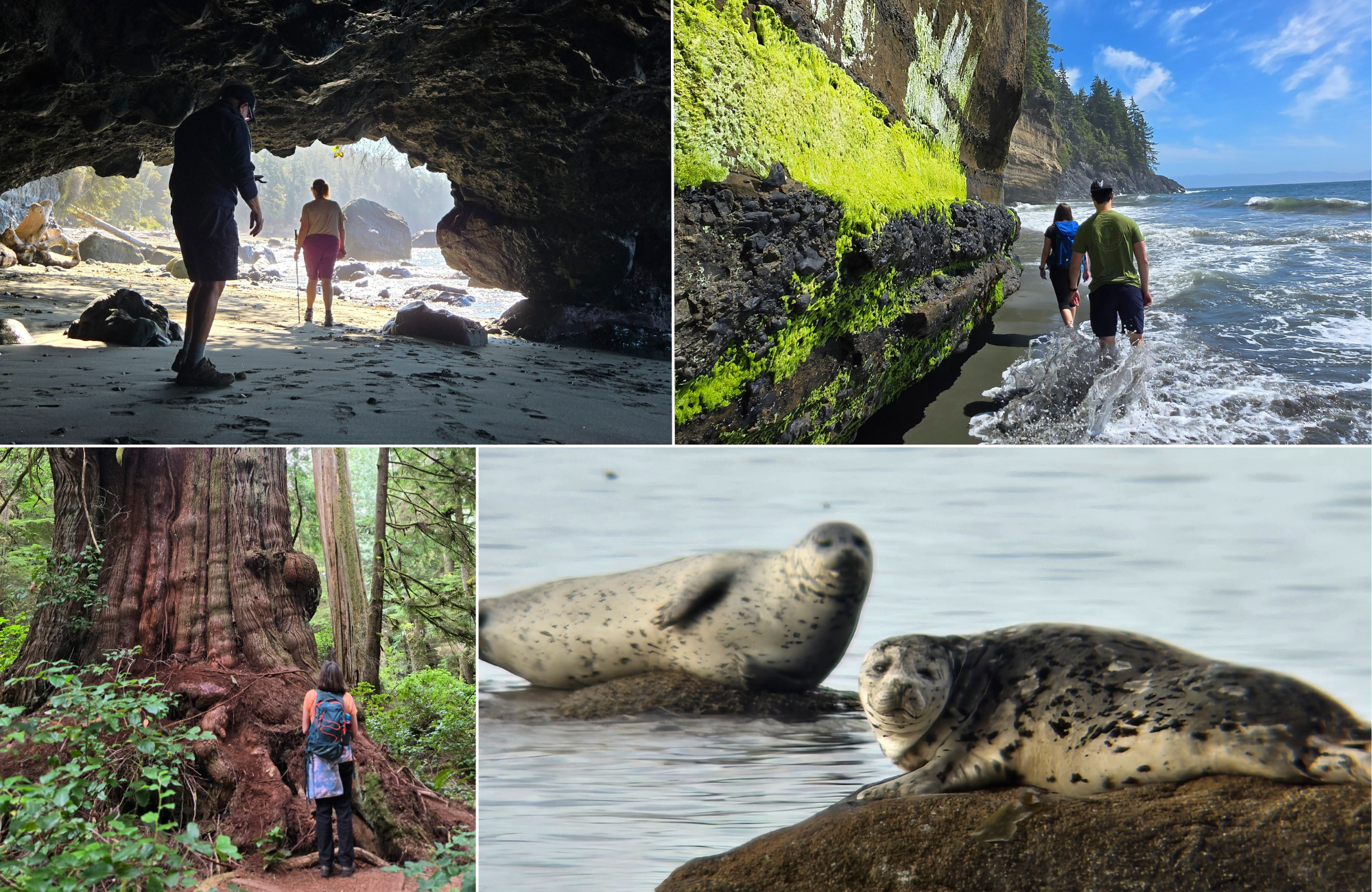
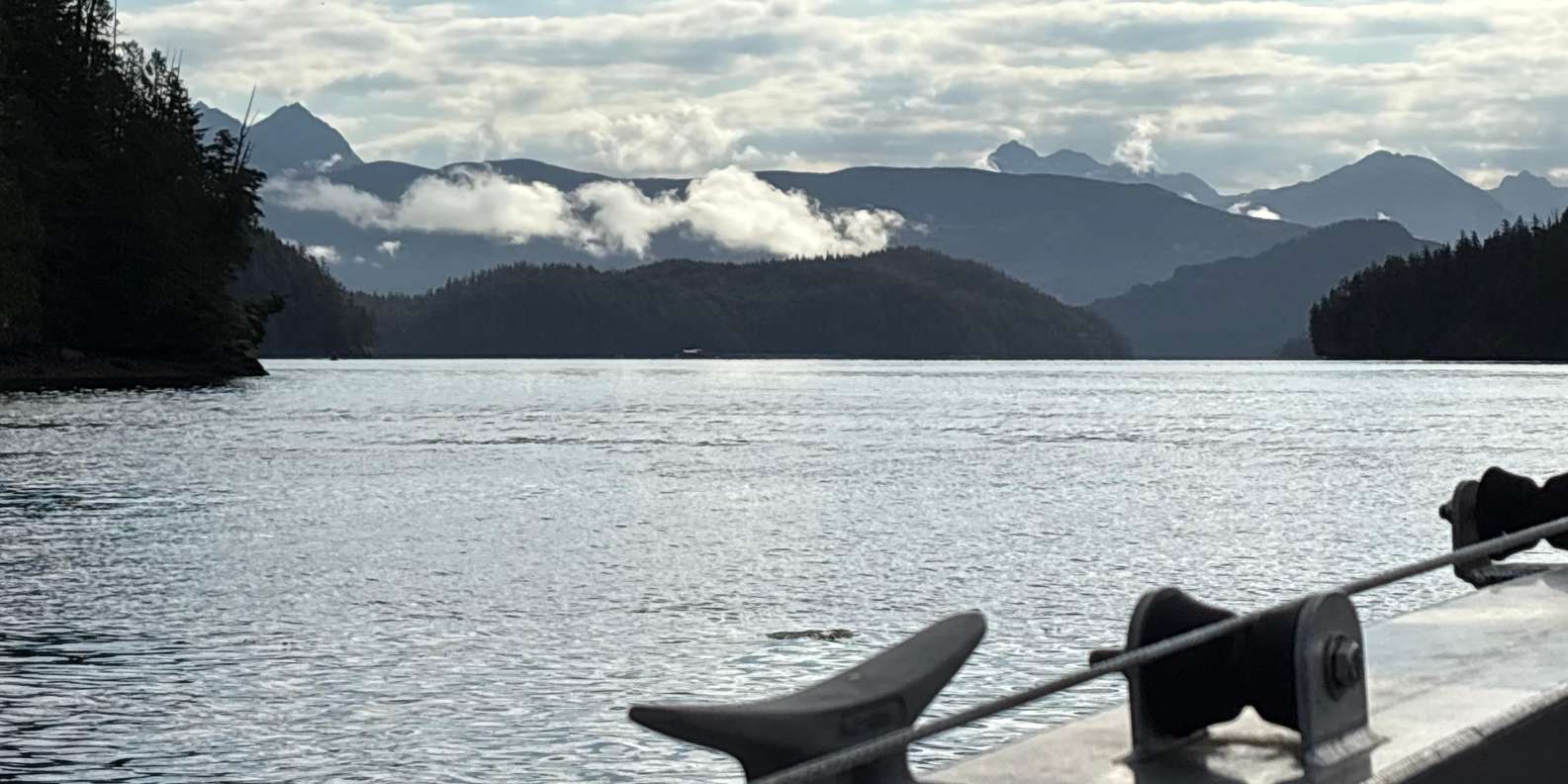
Tofino sits at the very end of Highway 4 on the wild west coast of Vancouver Island, British Columbia — a small surf town wrapped around a harbour, with the open Pacific on one side and the islands and inlets of Clayoquot Sound on the other. It’s the kind of place people come to for storms, surf and big trees. But the single most rewarding way to experience the coast here is from the seat of a kayak, low to the water, where seals surface beside you and bears work the shoreline a paddle’s length away.
This page is a practical guide to sea kayaking in Tofino — what Clayoquot Sound actually is, where you paddle, what you’ll see, and the honest answer to “do I need a guide?” The tours listed here are top-rated third-party operators; none of this is “official,” and the wildlife is wild, not staged. What follows is what we’d want a friend to know before booking.
What Clayoquot Sound Is — and Why It Matters
Clayoquot Sound (pronounced KLAK-wot) is a vast network of inlets, channels and forested islands stretching north from Tofino. In 2000 it was designated a UNESCO Biosphere Reserve — the first in British Columbia — and is today known as the Clayoquot Sound UNESCO Biosphere Region, covering roughly 350,000 hectares of land and sea. That’s not a marketing line: it means an intact temperate rainforest meeting a productive cold-water coast, which is exactly why the wildlife here is so dense.
The Sound is also living First Nations territory. Tofino lies in the traditional territory of the Tla-o-qui-aht First Nation, who declared Meares Island a Tribal Park in 1984 — one of the first such declarations in Canada. Paddling here, you’re a guest on the water.
Sheltered Water vs. the Open Coast
The most important thing to understand before you book is that “kayaking Tofino” can mean two very different things.
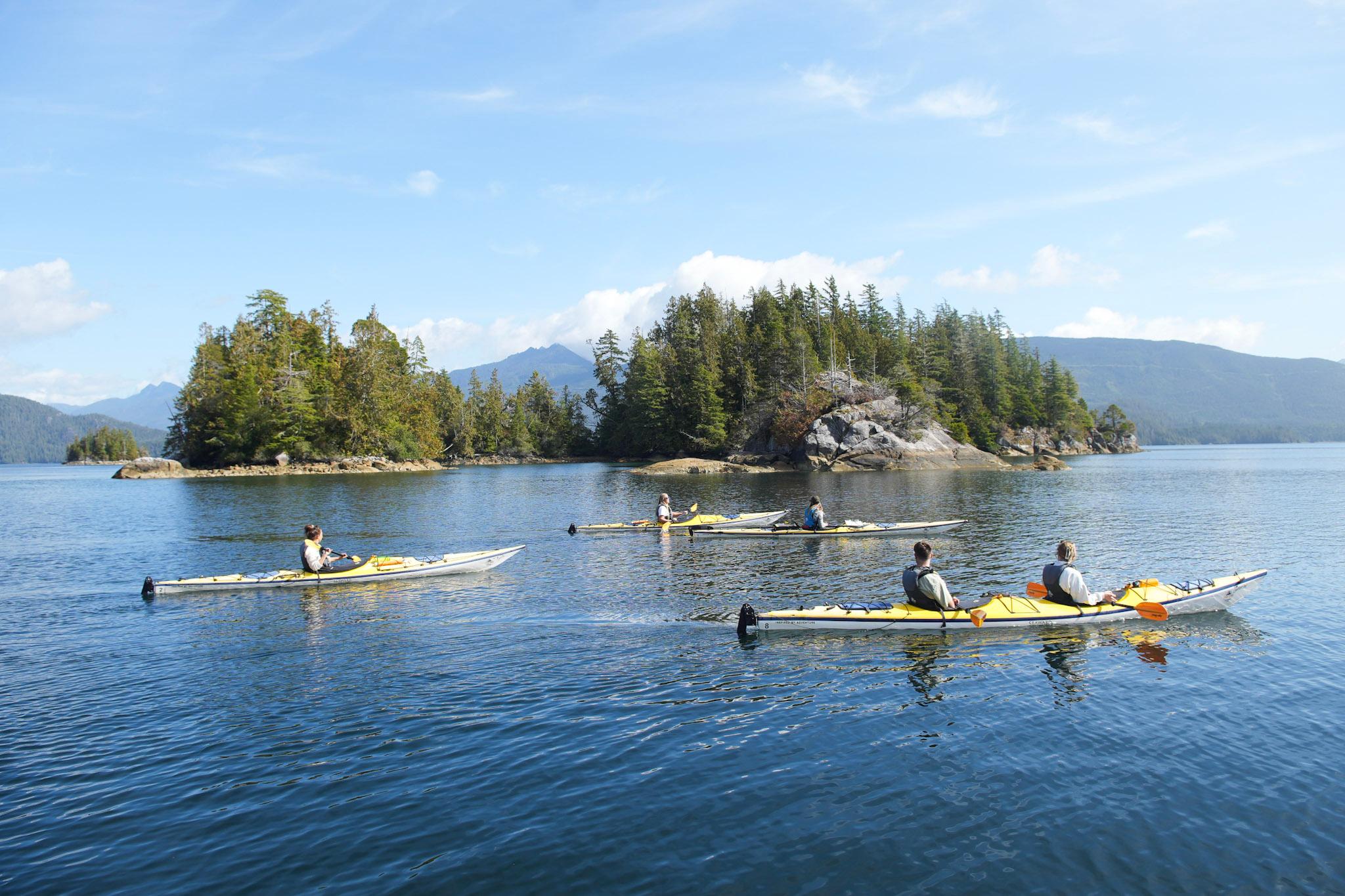
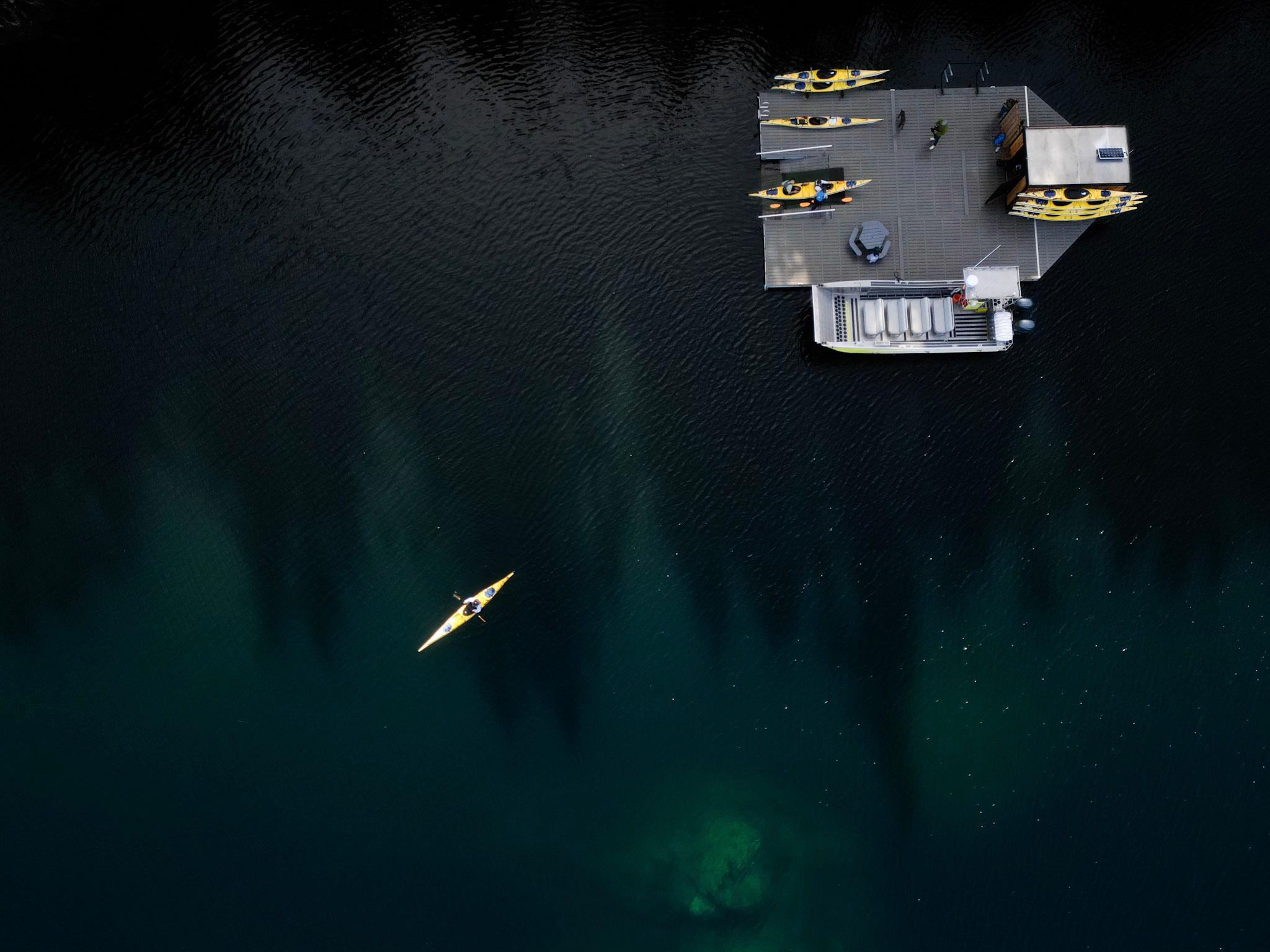
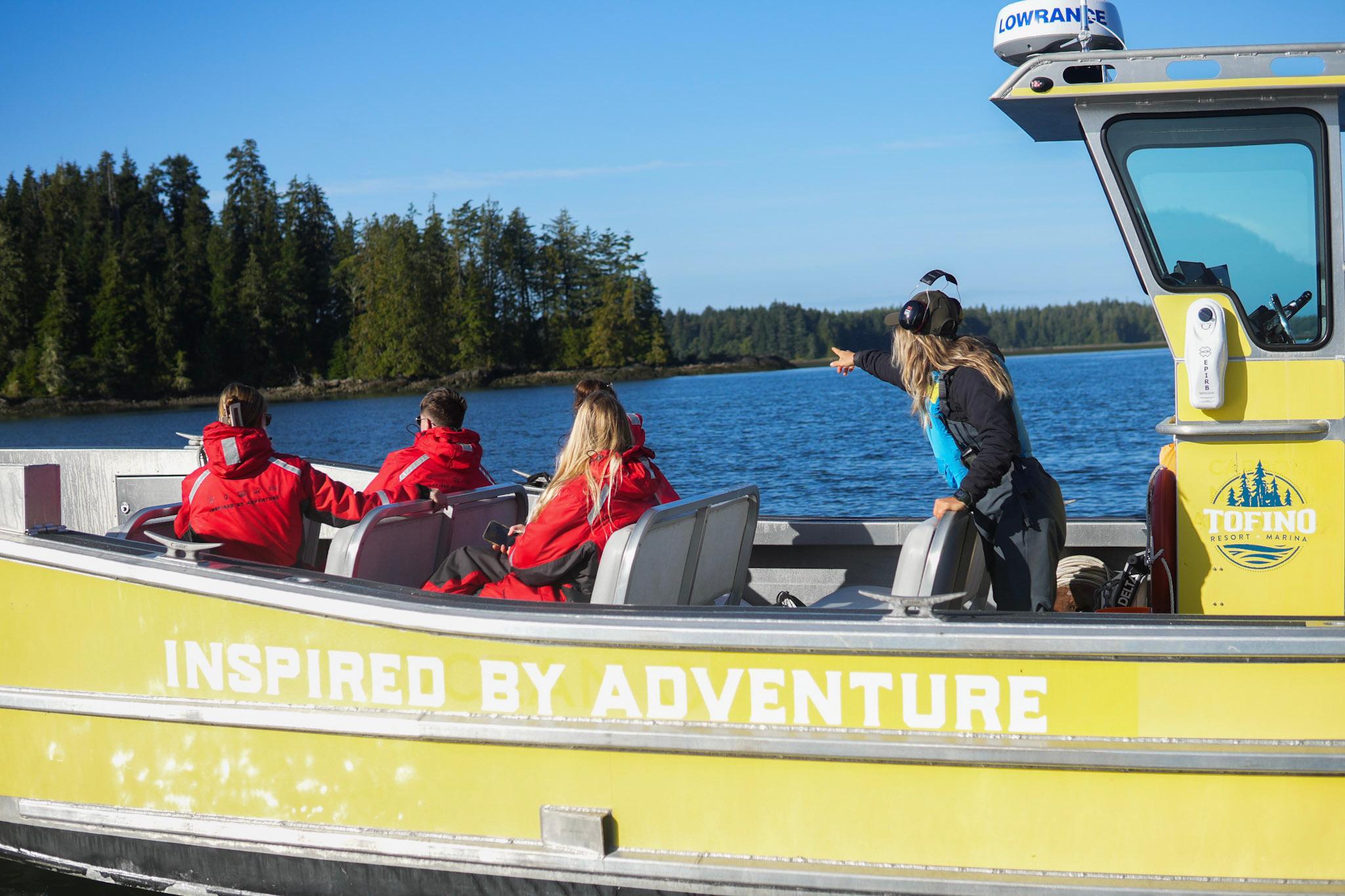
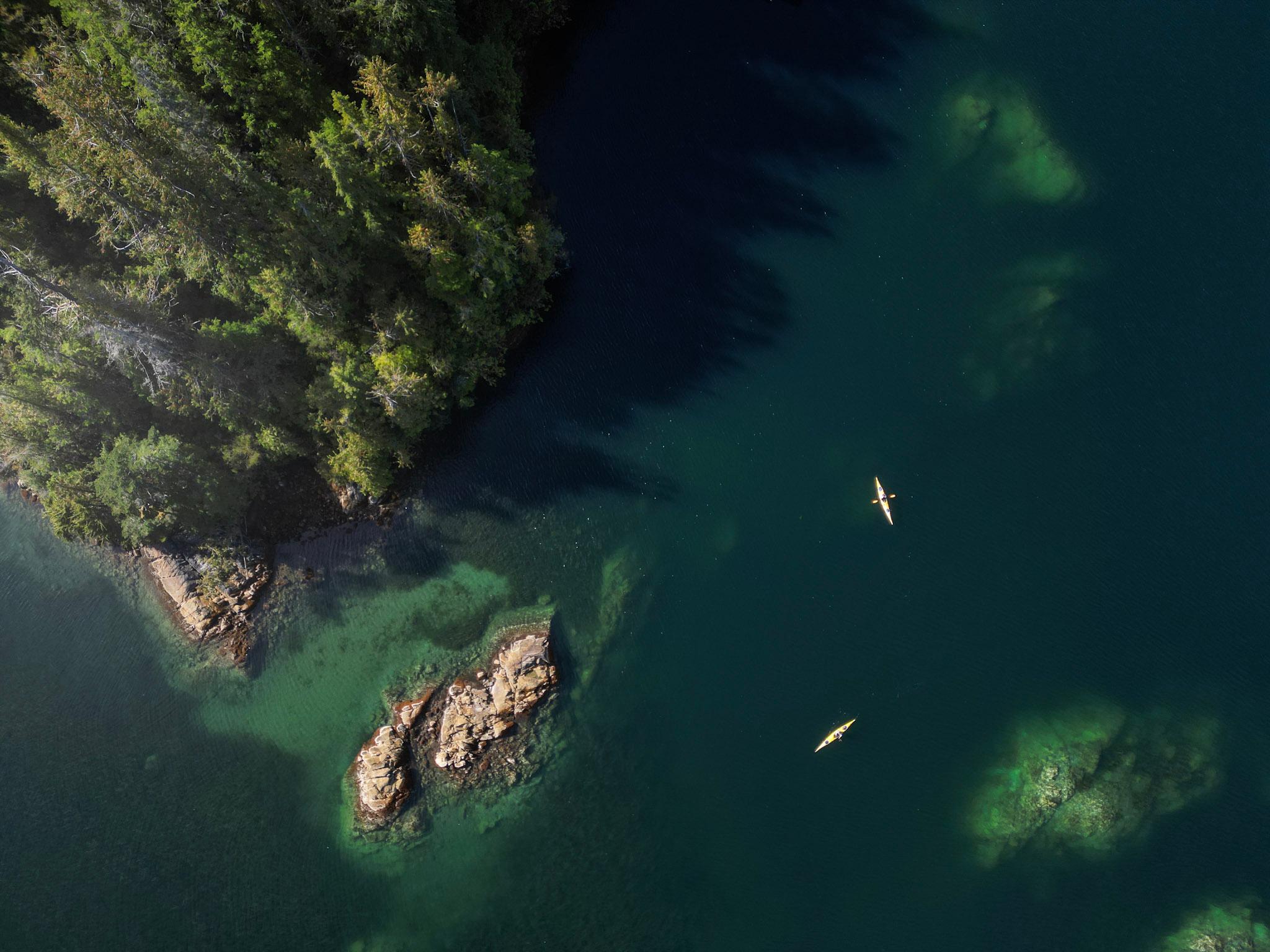
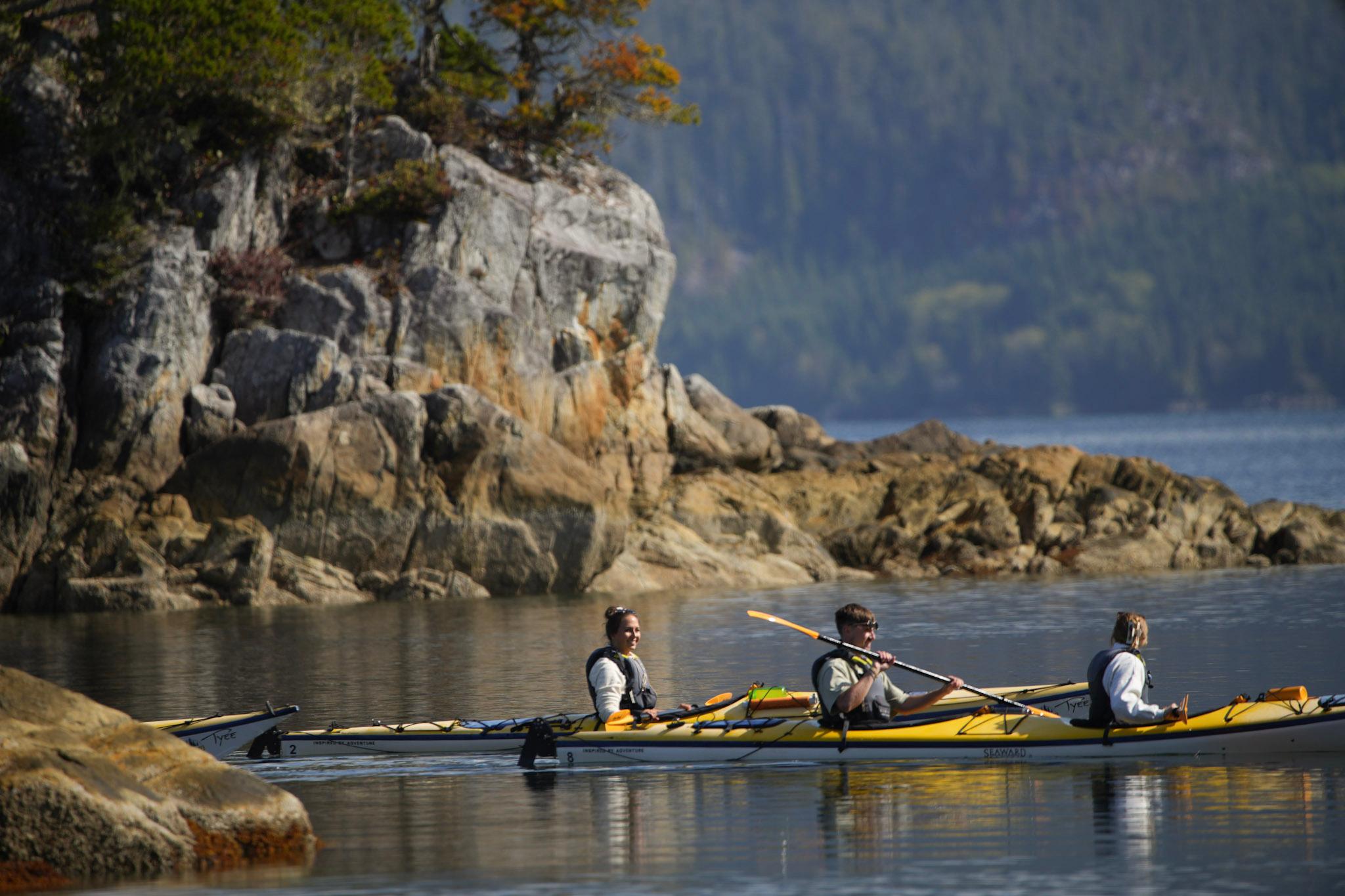
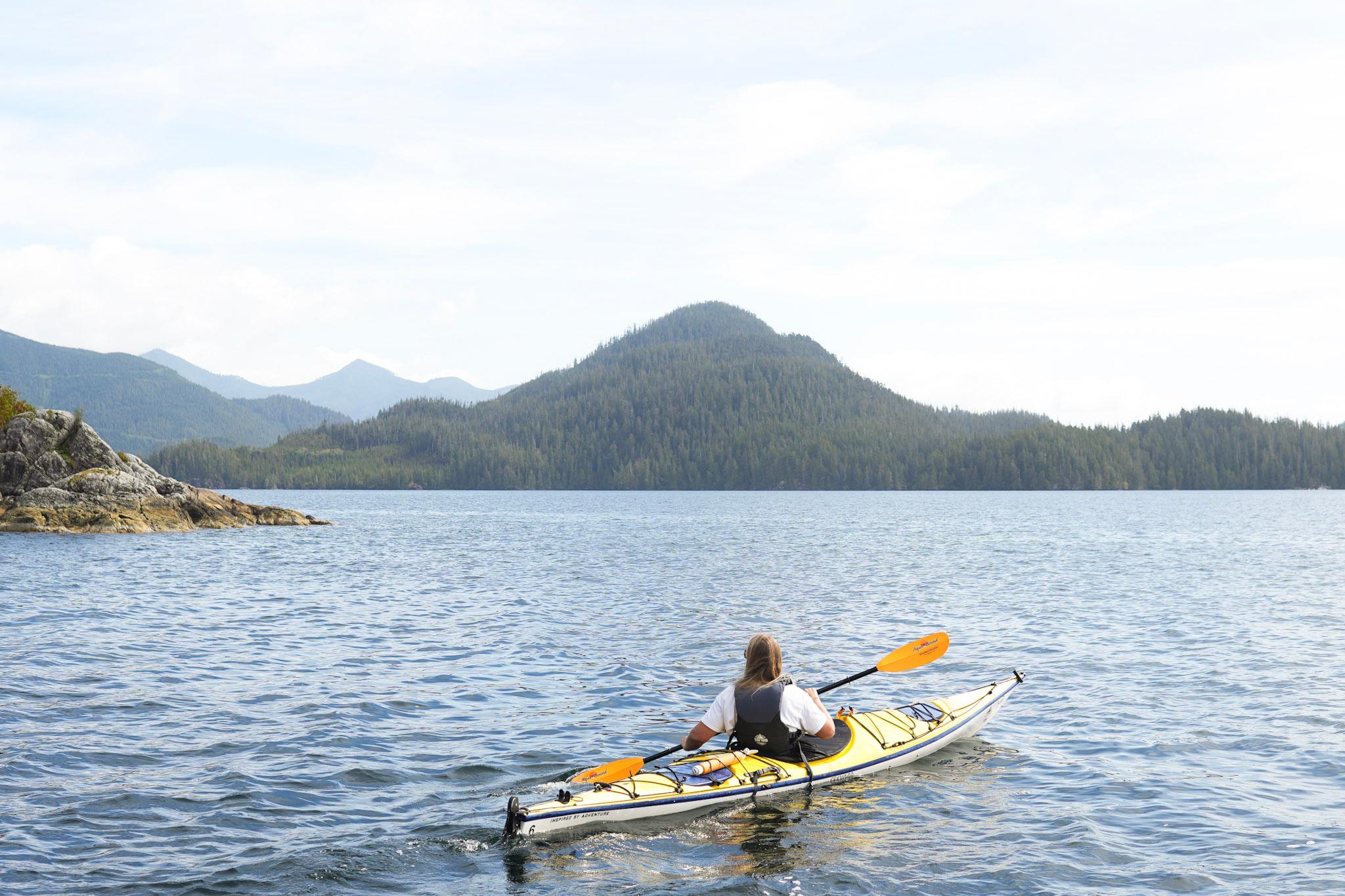
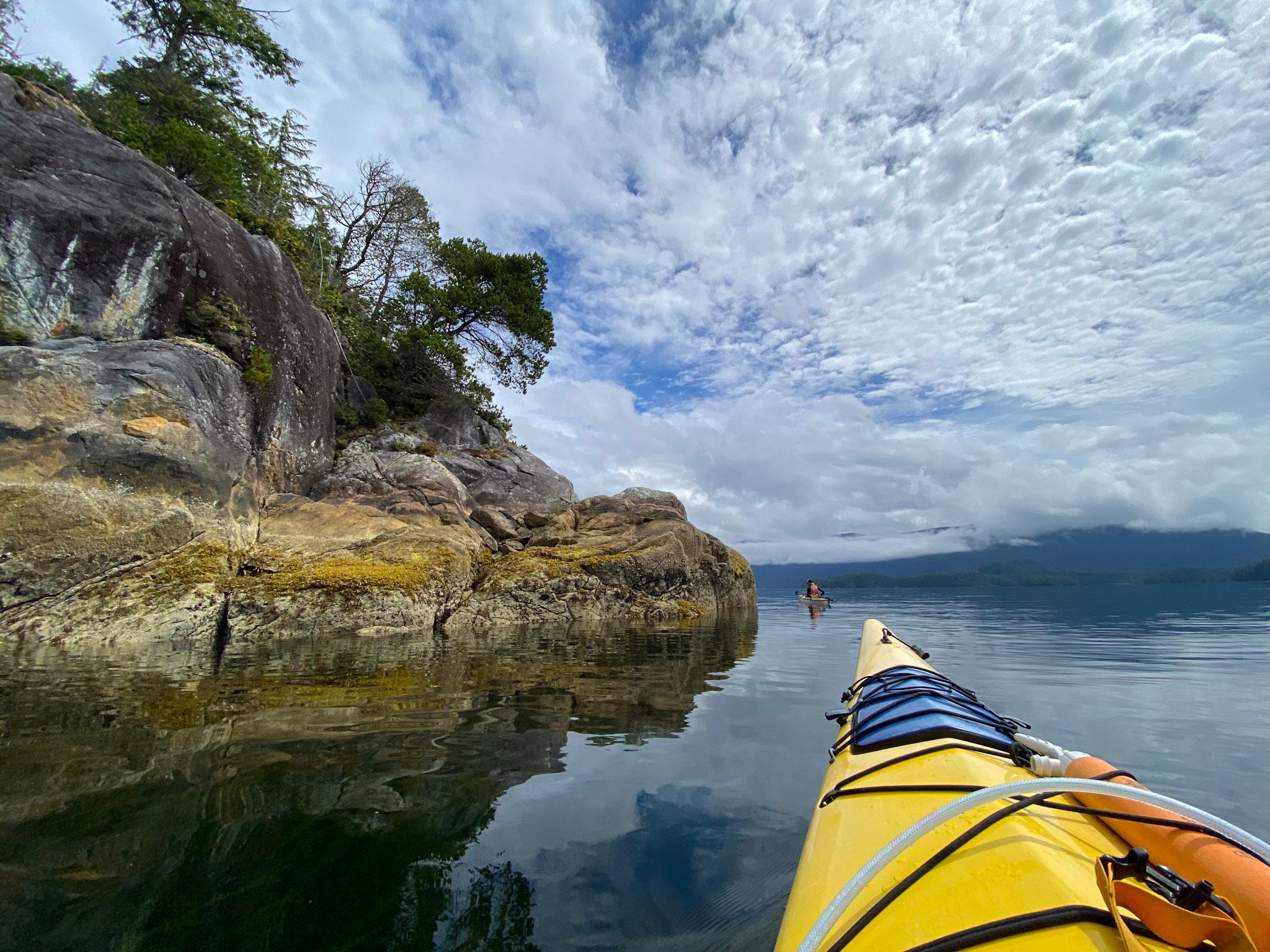
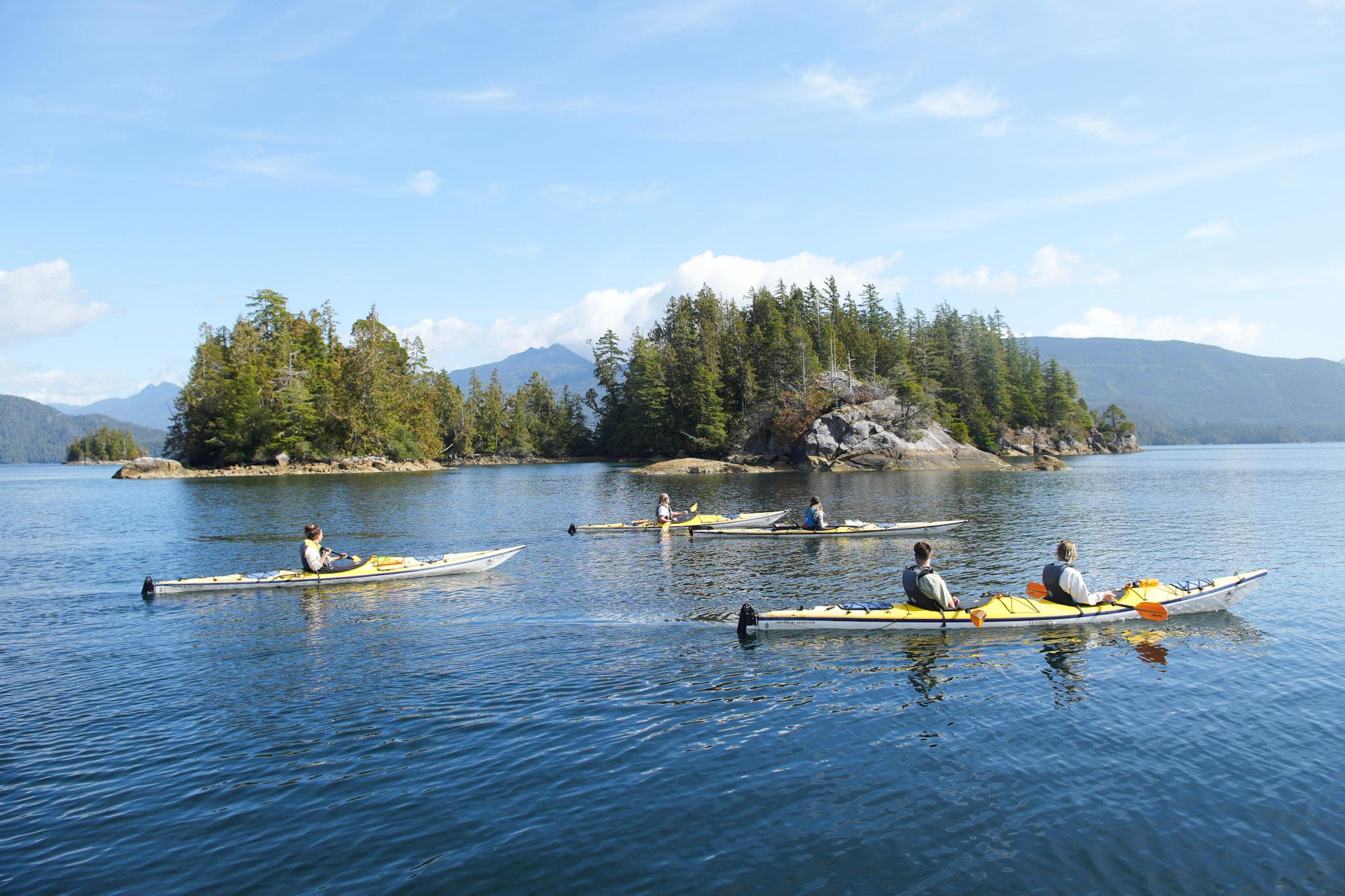
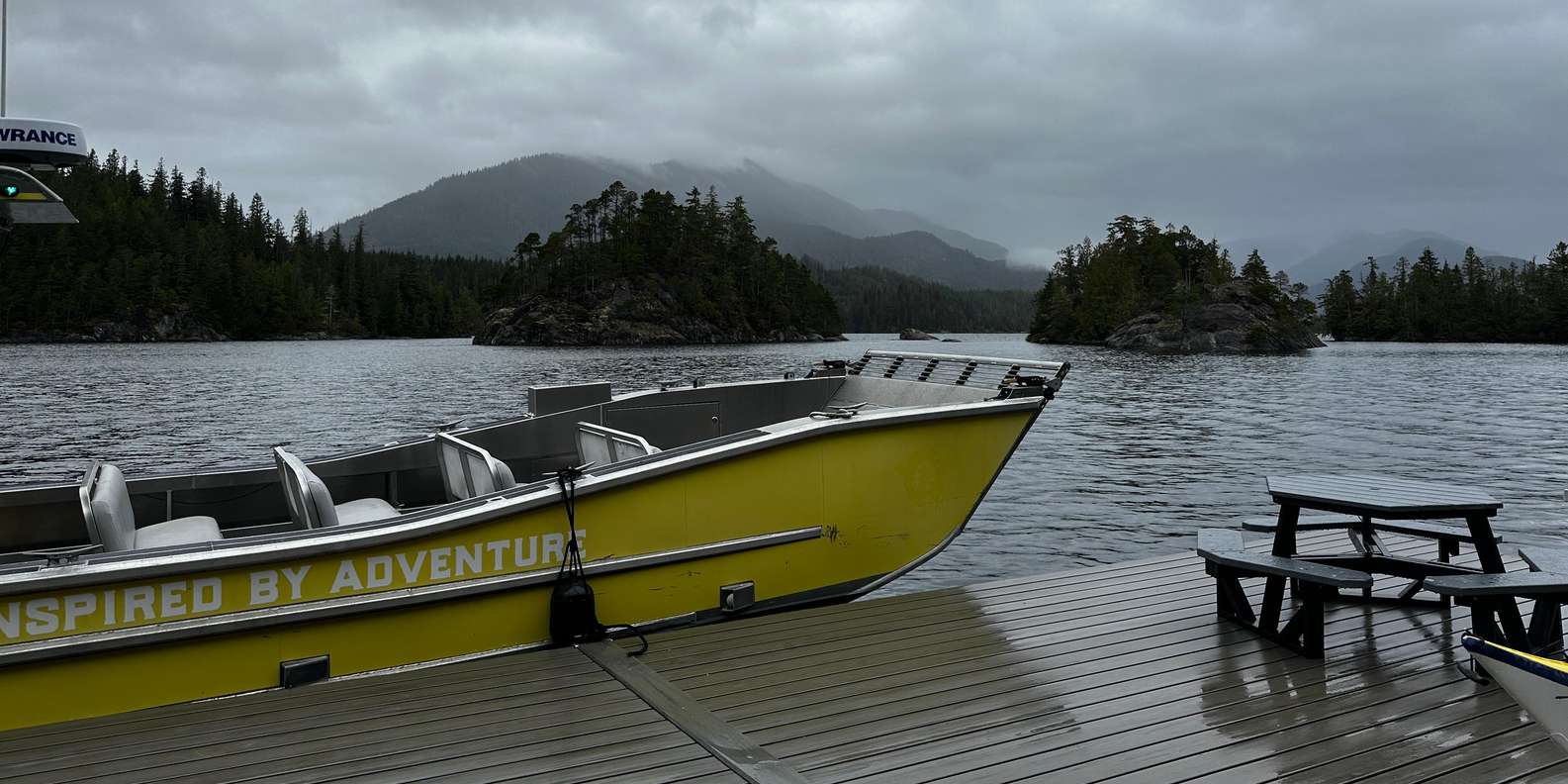
Sheltered, inside water — the inlets and island-protected channels of Clayoquot Sound, places like Lemmens Inlet and the crossing to Meares Island — is calm, glassy on a good day, and genuinely beginner-friendly with a guide. This is where the featured tour on this page goes: a boat carries you and the kayaks 25 minutes out to a remote floating dock, dropping you into protected water away from harbour boat traffic, float planes and the strongest currents.
The open outer coast — the exposed Pacific side, the outer shores of islands like Flores Island — is a different animal: ocean swell, surf landings, fog among motorized boats, and strong tidal currents. That’s terrain for experienced paddlers and multi-day expeditions, not a first afternoon on the water. If a tour says “sheltered” or “protected waters,” that’s the beginner-appropriate one.
The Wildlife You’ll Actually See
Clayoquot Sound is one of the best places on the BC coast to see wildlife from a kayak, but it helps to know what’s common and what’s a lucky day.
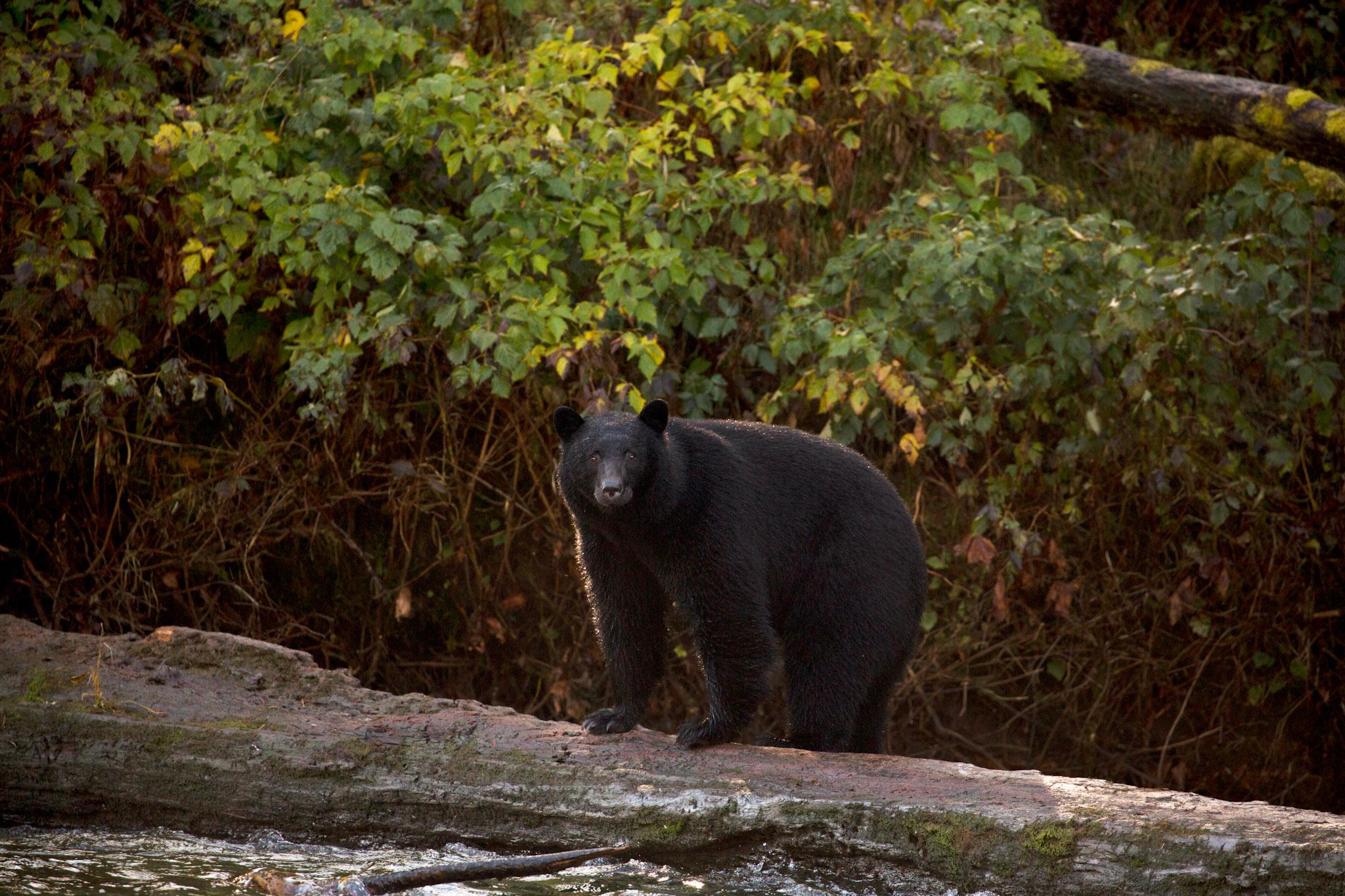
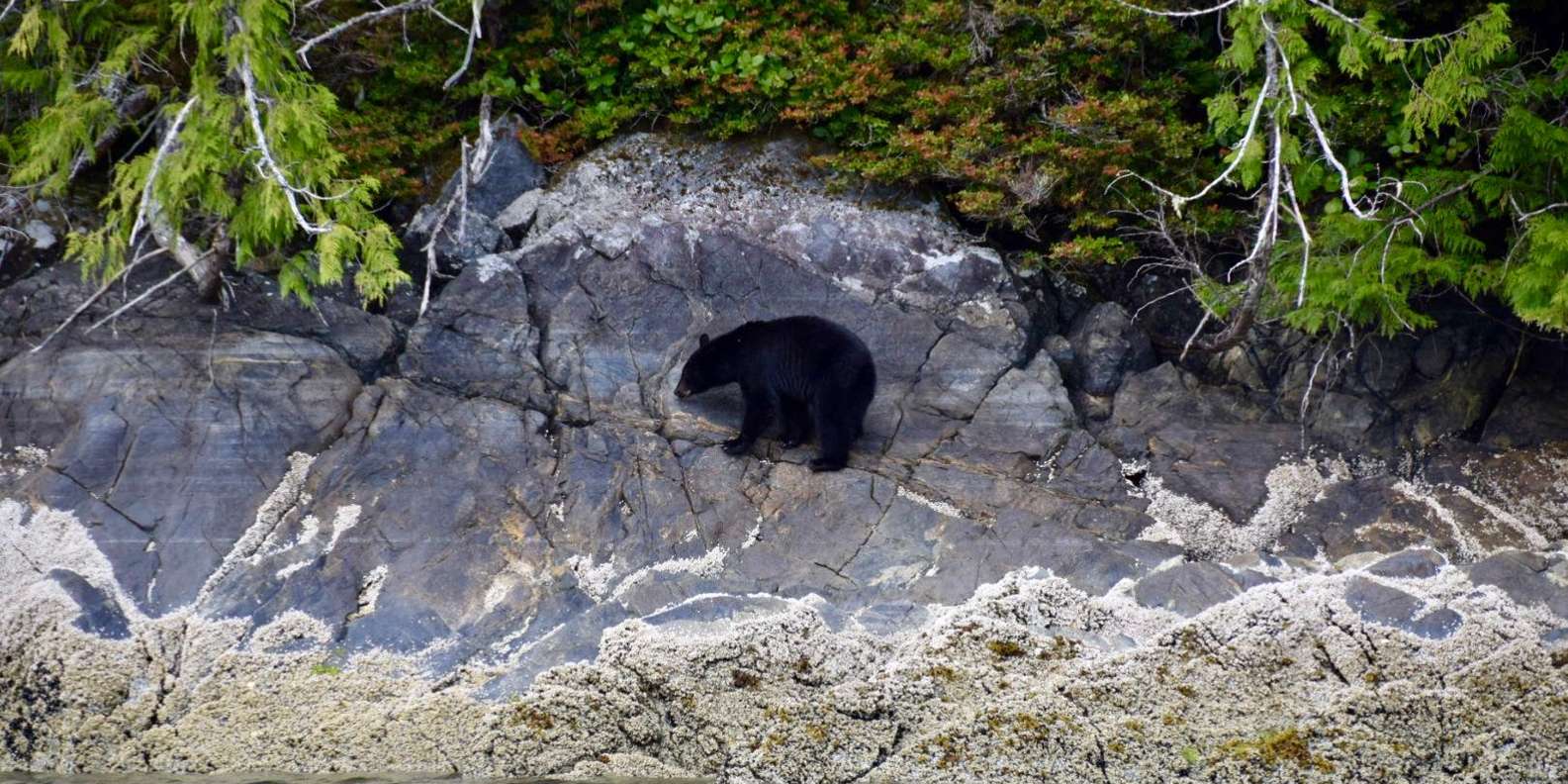
- Black bears (common, and a highlight). Coastal black bears come down to the shoreline at low tide to forage the exposed intertidal zone — flipping rocks for crabs and shore crabs and digging for clams. This is why bear-focused trips are timed around the tide, and why a kayak or small boat gets you close from the water without disturbing them.
- Sea otters and harbour seals (common). Sea otters float in “rafts”; curious harbour seals often surface near kayaks.
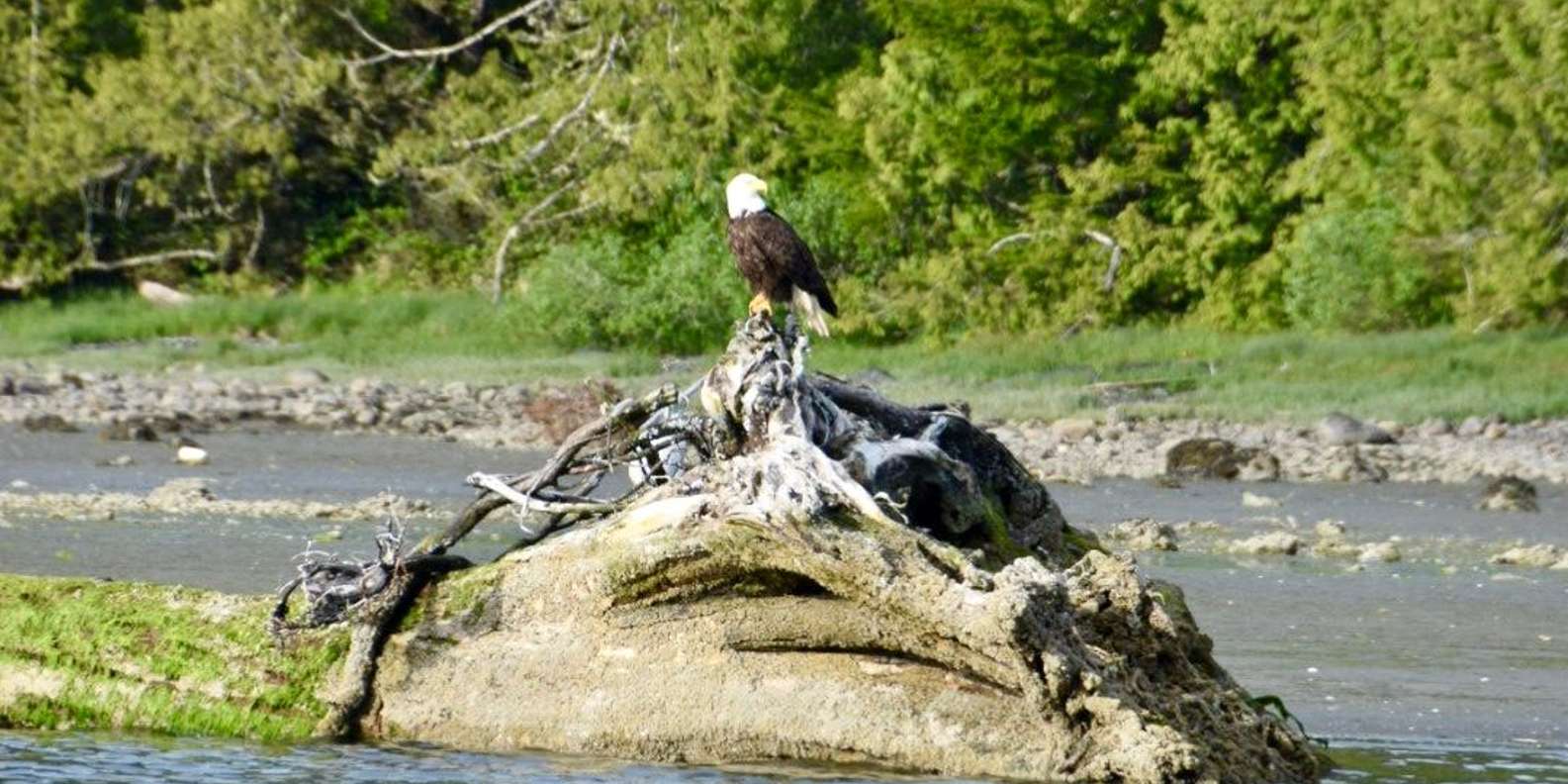
- Bald eagles (common). Perched along the shoreline and old-growth edge.
- Gray whales (seasonal). A small number of gray whales feed off Tofino through the summer rather than continuing north, and the main migration passes roughly March into April. They’re more reliably seen on a dedicated whale tour, but a summer paddler can get lucky.
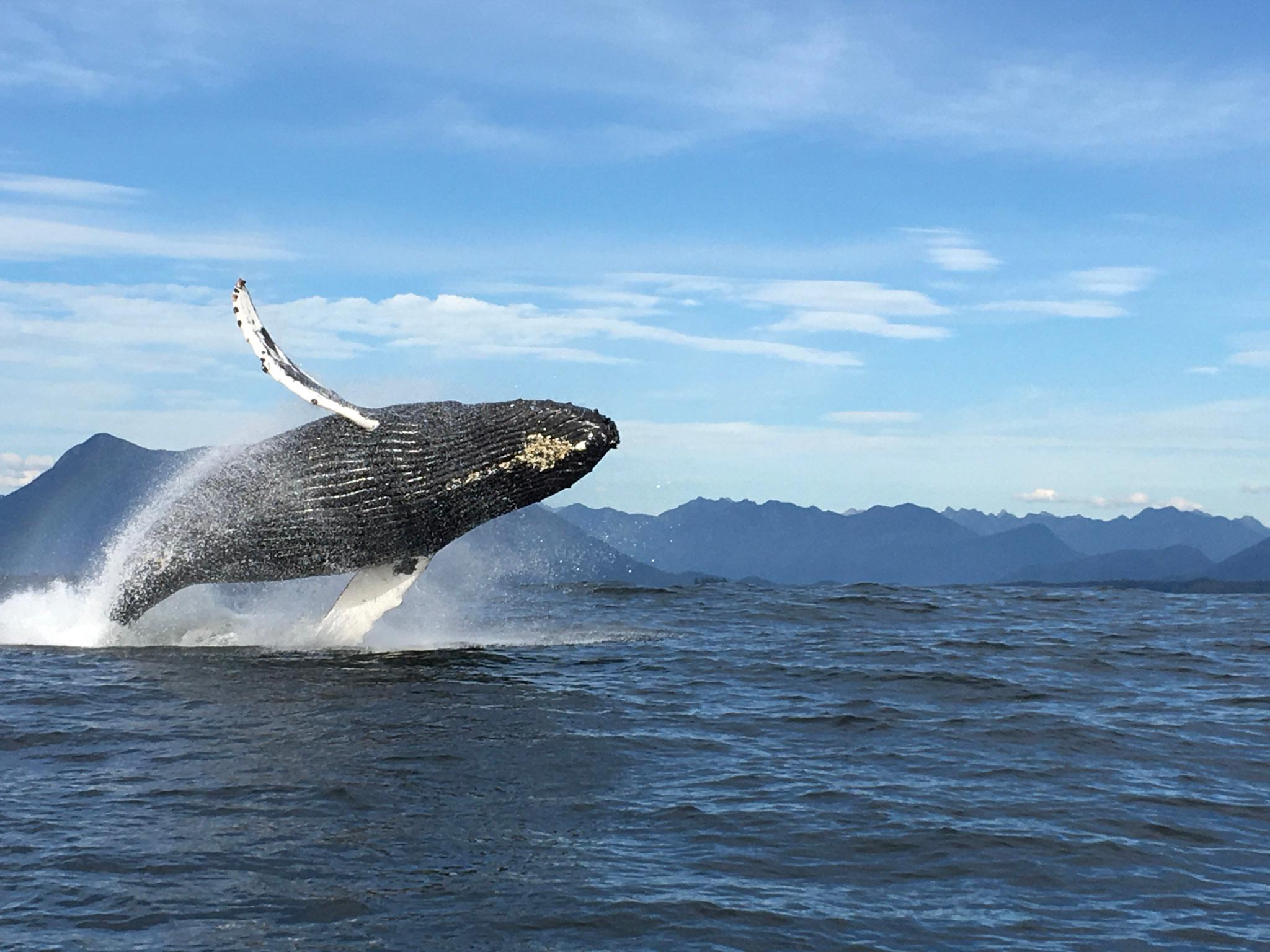
- Humpbacks (roughly May–October) and orca (occasional). Orca sightings from a kayak are possible but not something to count on.
The intertidal zone itself — sea stars, anemones, crabs — is half the show at low tide.
When to Go
The kayak season runs roughly May through October, with summer offering the warmest, calmest, most beginner-accessible conditions. Tofino’s famous “storm season” in winter is for watching weather from shore, not paddling. Bears are viewable spring through fall, gated more by low-tide timing than by the calendar, so the best departures often track the tide chart rather than the clock.
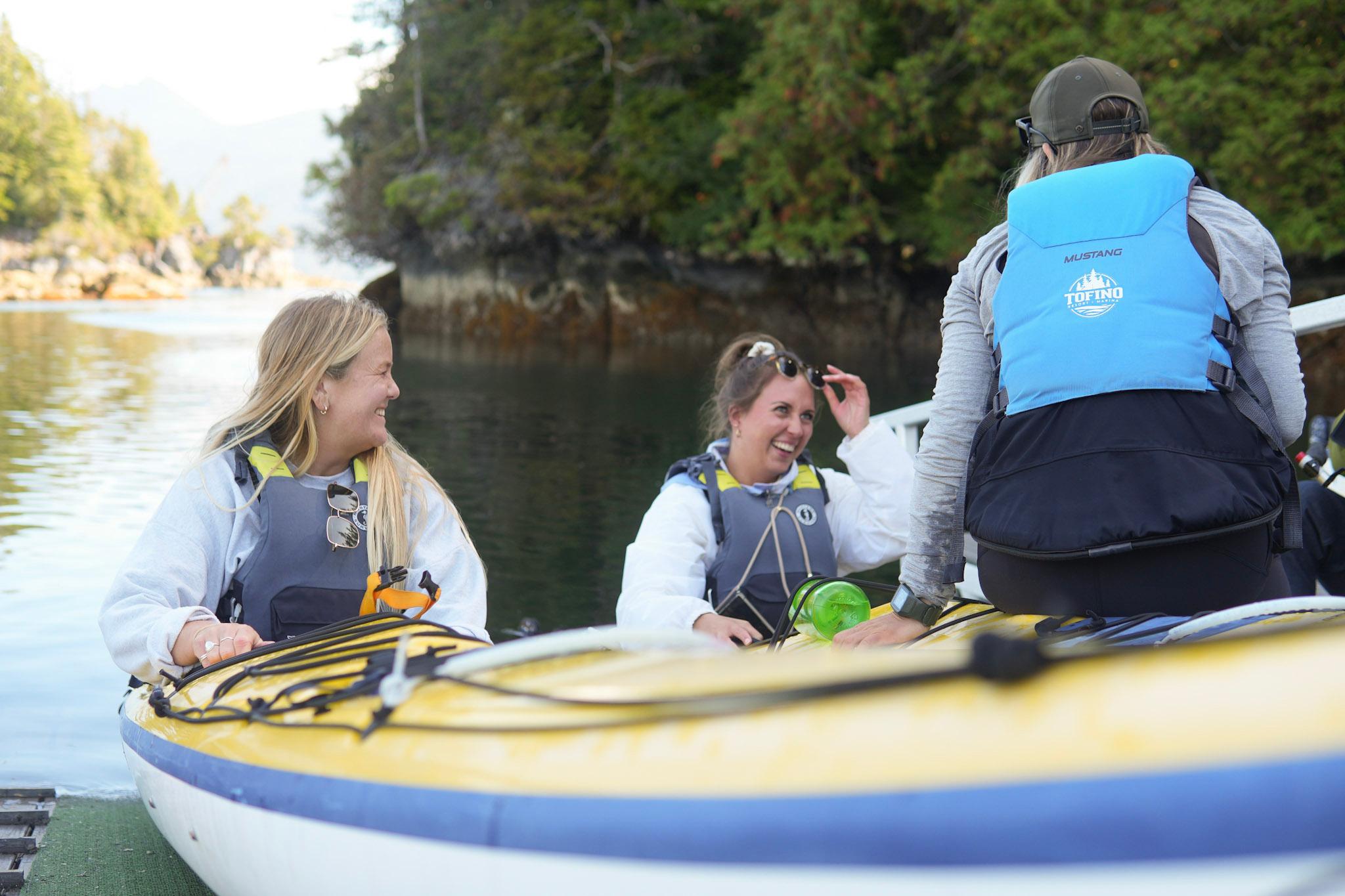
One thing that surprises first-timers: the water is cold year-round, typically around 11–15 °C even in peak summer (as of mid-2026). That cold water — not the waves — is the real reason guided trips are the norm for visitors: operators supply the wetsuits and immersion gear, the safety briefing, and the local knowledge of where the current runs. Some passages in the Sound can run several knots, and launching and landing depend on the tide height, all of which a guide reads for you.
Meares Island and the Big Trees
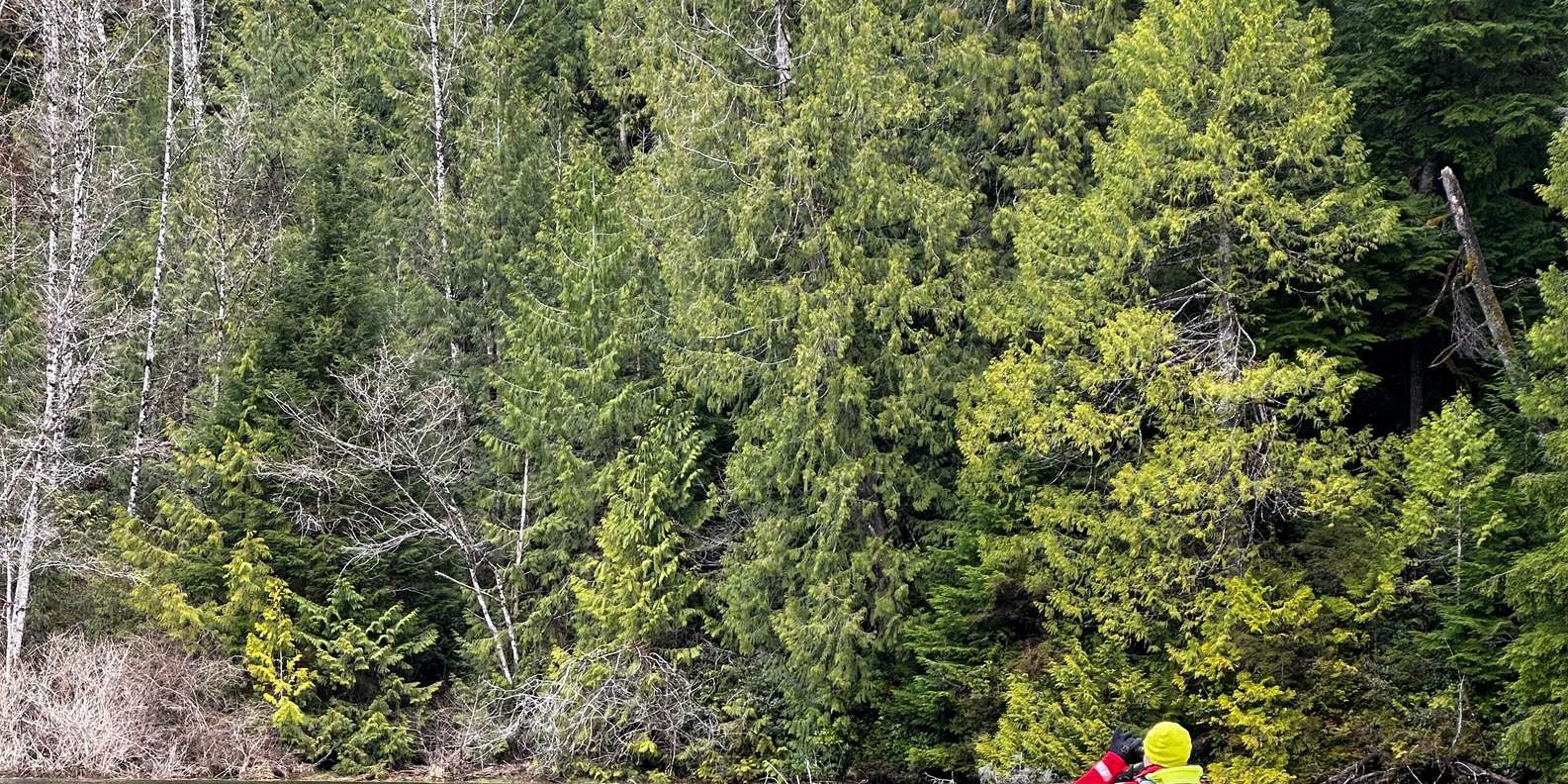
If you have an extra half-day, Meares Island is worth it. A short crossing from Tofino (about ten minutes by boat, or a guided paddle), it holds the Big Tree Trail — a hand-built cedar boardwalk through old-growth western redcedar, including the famous “Hanging Garden Tree,” one of the oldest and largest cedars on the coast, estimated at well over a thousand years old. Combined kayak-and-walk tours pair the paddle with the forest.
Guided or On Your Own?
For a visitor with limited time, guided is the clear answer — not because the sheltered water is dangerous in calm conditions, but because cold water, tidal currents and getting to the good launches all reward local knowledge, and the gear comes included. Experienced sea kayakers with their own cold-water kit and navigation skills can certainly self-guide the inside passages, but the open coast should be left to those who know it.
Whichever way you go, the reward is the same: two quiet hours on protected water in a UNESCO Biosphere, with a real chance of bears, otters and eagles along the shore. When you’re ready, check availability and book.